Renewable Energy
Agrivoltaics and ecovoltaics: solar with agriculture or habitat on repurposed land
Agrivoltaics / Ecovoltaics
Agrivoltaics and ecovoltaics are multibenefit land repurposing strategies that offer economic and ecological benefits, reducing groundwater pumping while contributing to a clean energy transition.
Agrivoltaics
Integrates solar energy production and agriculture (crops or livestock) simultaneously. Panels can provide shade for sun-sensitive crops and animals like sheep.
Ecovoltaics
Fosters ecosystem functions like habitat and biodiversity. Infrastructure is designed to contribute to ecosystem health and sustainability.
Agrivoltaics work best with crops that benefit from moderated temperatures and soil moisture, such as berries, leafy greens, herbs, and native grasses.
Key Benefits
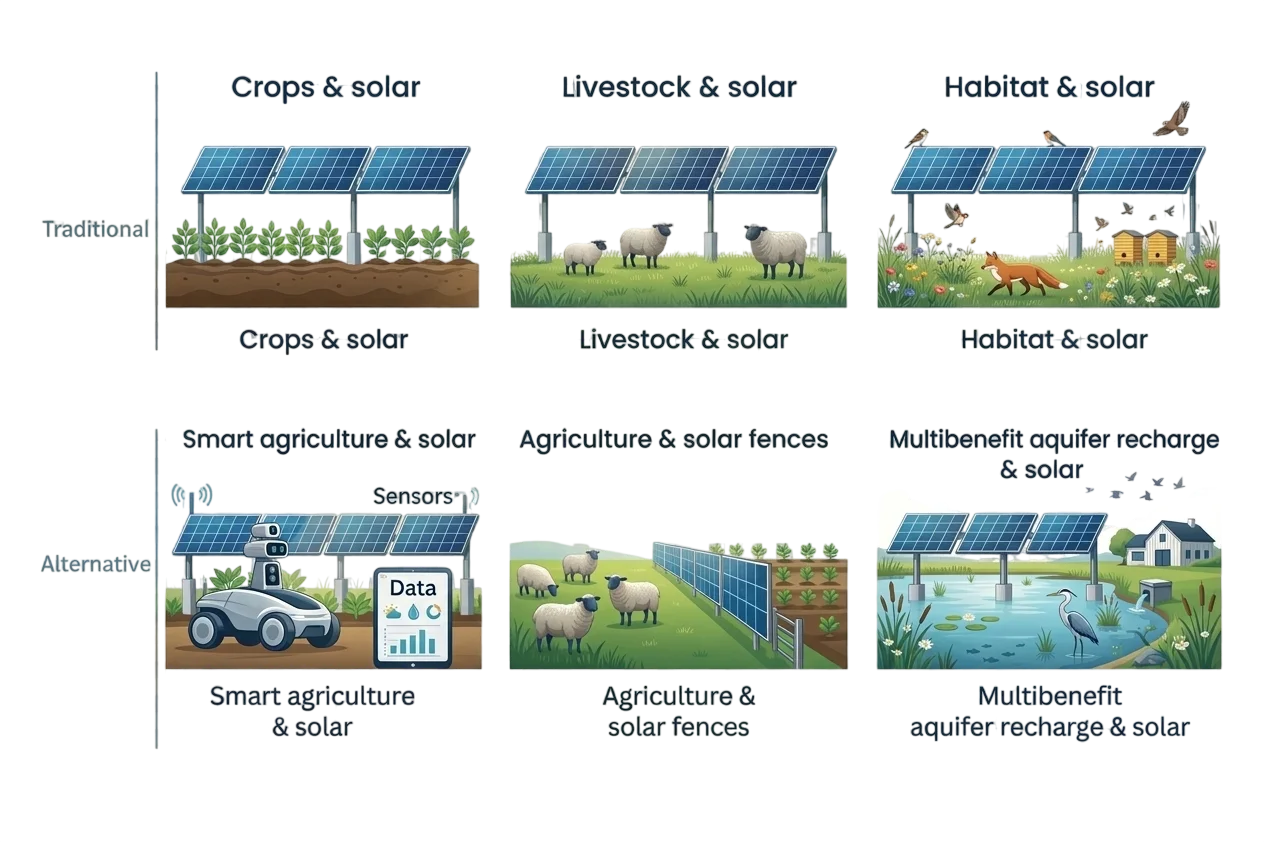
The top images show traditional uses of agrivoltaics for crops and livestock, and ecovoltaics for habitat conservation. The bottom images show alternative ideas that allow multiple uses of the soil and of the infrastructure.
Costs and Permitting
Costs and permitting are important considerations. Agrivoltaic systems often have higher capital costs than traditional solar (e.g., panels may need to be raised higher), ranging between $0.07/WDC and $0.80/WDC more than regular installations.
Permitting Advantages
Local governments have limited authority to prohibit solar for on-site use, allowing farmers to attain permits more easily than traditional commercial solar.
Community Support
Involving community partners and farmers in the management can reduce opposition and delays common in clean energy permitting.
The conversion involves a substantial initial financial investment. Absent local examples, producers should consider small-scale tests with mock-up panels to identify unforeseen challenges.
Resources
Renewable Energy — Summary
| Measure | Description | Water Savings Benefits | Other Benefits | Factors to Consider |
|---|---|---|---|---|
| Renewable energy — solar | Installation of solar panels on land previously used for agriculture. | No irrigation. | Combines with crops/habitat. Reduces electricity costs and provides new revenue. | Land use, soil type, climate, topography, connectivity to user. |